
Key Takeaways
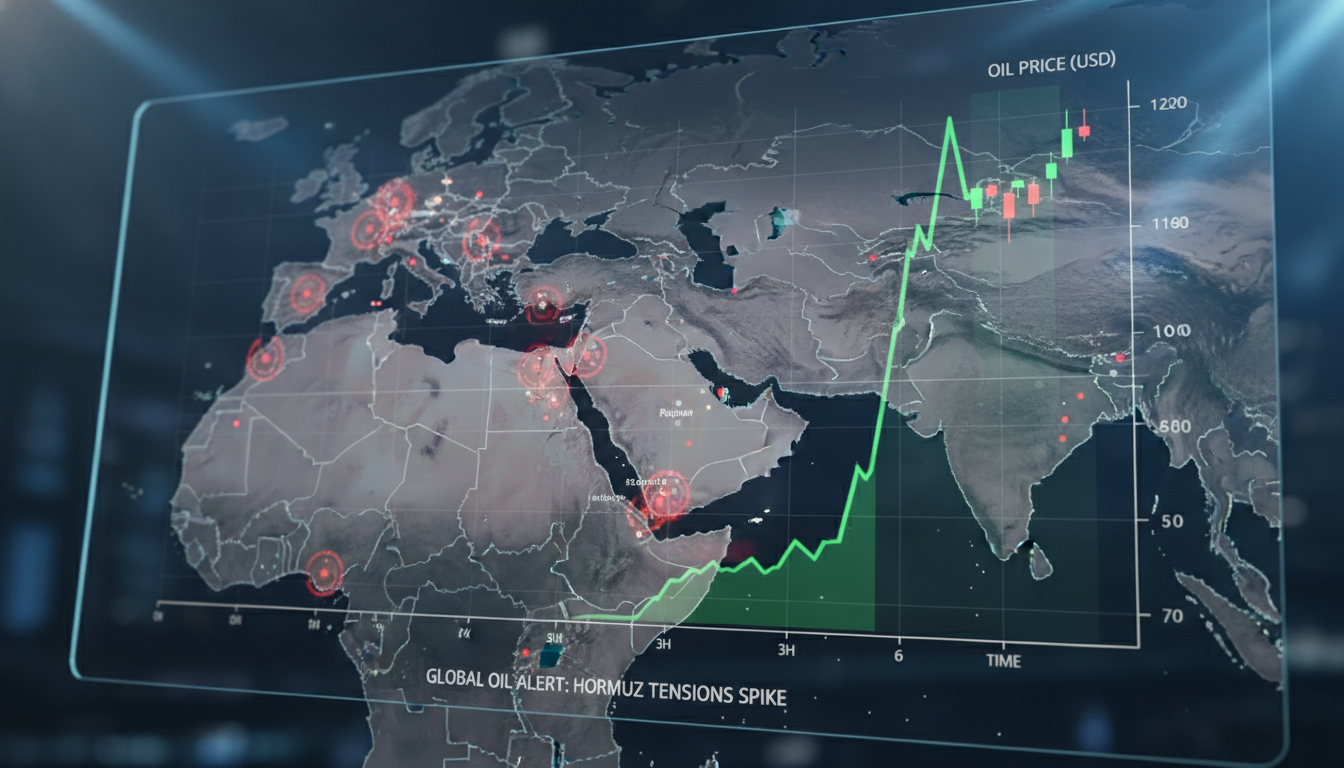
- Brent Crude has surged past $114/bbl following strikes on the Fujairah Oil Industry Zone.
- The Strait of Hormuz remains under a partial blockade, threatening 20% of global oil and LNG supply.
- The U.S. has initiated 'Project Freedom' to provide military escorts for commercial tankers.
- The UAE's recent exit from OPEC adds a new layer of uncertainty to market stabilization efforts.
- Analysts warn that sustained prices above $125 could trigger a global recession.
Energy markets are reeling today as global benchmarks Brent and WTI crude experienced a sharp upward surge following a coordinated series of missile and drone strikes in the Middle East. The primary target: the Fujairah Oil Industry Zone (FOIZ) in the United Arab Emirates, a critical energy nexus that many investors consider the region's most vital "safety valve."
A Geopolitical Shock to the Global Supply
As of May 5, 2026, the global oil market is grappling with what analysts are calling a "worst-case geopolitical shock." The Islamic Republic of Iran has been attributed as the source of the strikes by both UAE and U.S. intelligence agencies. This escalation comes at a particularly fragile moment, as Iran has simultaneously expanded its maritime "control zone" within the Strait of Hormuz, effectively blockading the world's most essential oil transit route.
For accredited investors monitoring the sector, the implications are immediate. Brent Crude has surged past $114 per barrel, while WTI is trading firmly above $105. Last week, Brent briefly touched a four-year high of $126, and the current volatility suggests that ceiling may be tested again shortly.
The Fujairah Factor: Why This Attack Matters
Fujairah is not just another port; it is the world’s third-largest bunkering hub and the primary bypass route for oil seeking to avoid the Strait of Hormuz. Because the Strait typically handles roughly 20% of global oil and LNG supplies, Fujairah’s terminals represent the only major alternative for Gulf exports.
With these terminals now reportedly offline or severely limited, the risk of a total cessation of oil flows from the Gulf has shifted from a theoretical risk to a present reality. State-run ADNOC is currently assessing the damage, but the interruption of flows could stall global energy distribution for weeks.
Project Freedom and Operation Epic Fury
The U.S. response, led by President Trump, has materialized in "Project Freedom," a military-led initiative to escort commercial tankers through the blockaded waters. Maersk and other shipping giants have begun operating U.S.-flagged vessels under this protection, but the risk of a direct naval confrontation remains at an all-time high.
Investors should also note that this surge is the latest chapter in "Operation Epic Fury," a joint U.S.-Israeli military campaign initiated in February 2026 targeting Iranian infrastructure. The four-week-old truce agreed upon in April now appears to be dead, raising the specter of a full-scale regional conflict.
The UAE’s New Market Position
Adding another layer of complexity is the UAE's recent decision to officially exit OPEC on May 1, 2026. By moving to a "produce as needed" policy, the UAE has gained sovereign control over its output, but this transition occurred just days before the FOIZ attacks. This lack of a cartel-coordinated response could lead to even greater price swings as individual nations navigate the crisis independently.
Economic Outlook: The $125 Threshold
Analysts at Fox Energy are closely watching the $125 per barrel mark. Sustained prices above this level are widely expected to push the global economy into a deep recession, potentially stalling central bank efforts to stabilize interest rates. While high prices provide a short-term boon for domestic production margins, the macro-economic risk of a demand collapse remains the primary concern for long-term energy portfolios.
Editorial Note: At Fox Energy, we prioritize real-time data and direct intelligence from the field. Our analysis is tailored for accredited investors who require a nuanced understanding of how geopolitical shifts impact energy assets and infrastructure.
Data Sources: Market pricing via Bloomberg Terminal; Intelligence briefs from FOIZ Authority; Official statements from the UAE Ministry of Energy and U.S. Department of Defense regarding Project Freedom.
Frequently Asked Questions
Is the regional ceasefire still in effect?
No, the attacks on Fujairah and the escalating maritime blockade in the Strait of Hormuz have effectively ended the fragile four-week truce established in April 2026.
What is 'Project Freedom'?
Project Freedom is a U.S. military-led initiative launched to provide armed escorts for commercial oil tankers passing through the Strait of Hormuz and the Gulf of Oman to ensure global supply continuity.
How does the UAE's OPEC exit affect this crisis?
Since the UAE officially left OPEC on May 1, 2026, it is no longer bound by production quotas. However, the damage to its infrastructure currently limits its ability to use this new production flexibility to stabilize global prices.
Written by
Christian Rosenblum
Managing Editor